
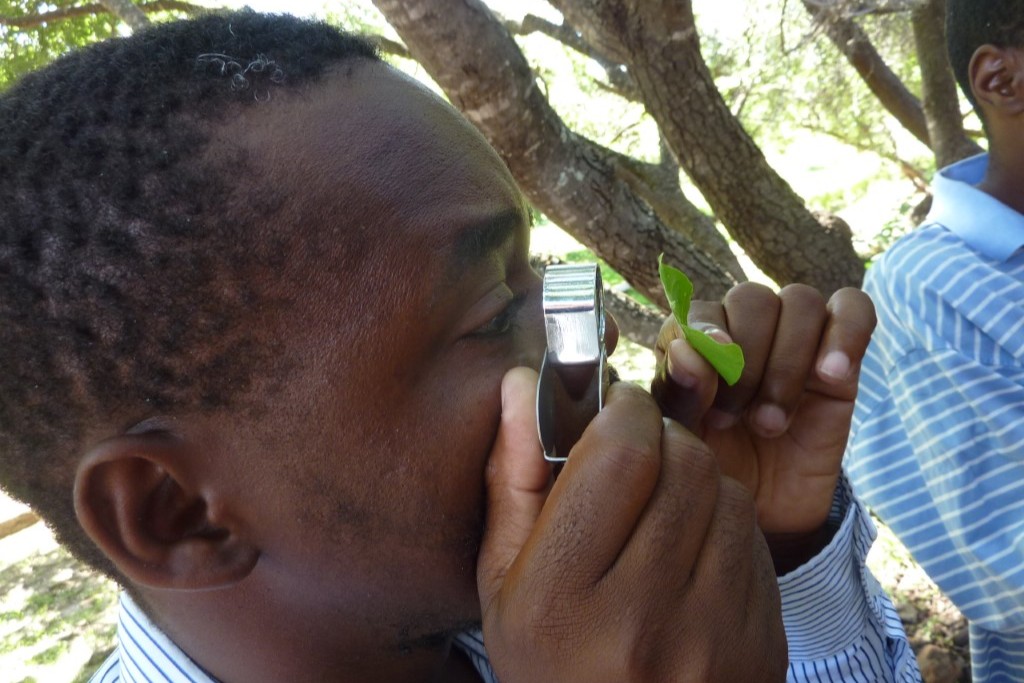
This course aims to provide you with the basic knowledge and skills to effectively identify and diagnose common pests. You will learn to recognise key pest characteristics and behaviour, develop skills to diagnose pest problems, and understand how to confirm and communicate a diagnosis.
The course will provide best practices in pest diagnosis, combined with a technical and soft-skills approach to help you navigate challenging grey areas around diagnosis.
Reviews:
Certifications: Foundation and Practitioner
Cost: 45
Duration: 10 hours
Languages: English, Spanish
Learners: 2734
Who is this for?
- The farmer advisor - Their role is to train and support farmers to diagnose their pest problems. Identifying common symptoms and applying a diagnostic process to analyse plant symptoms will enhance the advice given to farmers about possible pest causes.
- Farmers - Regularly needs to link symptoms observed in the field with specific pest problems, to better inform pest management decisions. This course will help navigate challenging grey areas around diagnosis.
- Students - Building confidence in symptom identification and learning more about the practical applications of diagnostic knowledge will strengthen the ability to turn theory into practice.
What will you learn?
On completion, you should be able to...
- Explain what is meant by the term 'pest'
- Outline the pest diagnostic process and explain why it’s important
- Identify major pests by their core characteristics and behaviours
- Identify common symptoms as they relate to different pest groups
- Interpret plant symptoms to suggest possible pest causes
- Refine your diagnoses by checking symptoms with field guides, diagnostic keys, and mobile tools
- Avoid common pitfalls and adhere to key considerations when making a diagnosis
Digital learning skills
- Join in polls and discussions to learn from others globally
- Access course materials and work through at your own pace
- Gain feedback from automated quizzes and activities to test your knowledge
- Improve critical thinking skills by investigating internet resources
Skills Framework
This course maps to a range of related skills in the Skills for Agriculture Framework (SFA). By completing this course, you will build on the following skills:
United Nations (UN) Sustainability Goals
The UN Sustainable Development Goals (SDGs) recognise that ending poverty and other deprivations must go hand-in-hand with strategies that improve health and education, reduce inequality, and spur economic growth.
This course aligns with the following sustainability goals:
- Explain what is meant by the term 'pest'
- Outline the pest diagnostic process and explain why it’s important
- Identify major pests by their core characteristics and behaviours
- Identify common symptoms as they relate to different pest groups
- Interpret plant symptoms to suggest possible pest causes
- Refine your diagnoses by checking symptoms with field guides, diagnostic keys, and mobile tools
- Avoid common pitfalls and adhere to key considerations when making a diagnosis
This course is made up of 4 sections:
- Section 1: Defining what is classified as a pest and the diagnostic process
- Section 2: The characteristics and behaviours of pests, including insects, mites and pathogens
- Section 3: Pest symptoms and their causes
- Section 4: How to check and make a final diagnosis
- The farmer advisor - Their role is to train and support farmers to diagnose their pest problems. Identifying common symptoms and applying a diagnostic process to analyse plant symptoms will enhance the advice given to farmers about possible pest causes.
- Farmers - Regularly needs to link symptoms observed in the field with specific pest problems, to better inform pest management decisions. This course will help navigate challenging grey areas around diagnosis.
- Students - Building confidence in symptom identification and learning more about the practical applications of diagnostic knowledge will strengthen the ability to turn theory into practice.
- Join in polls and discussions to learn from others globally
- Access course materials and work through at your own pace
- Gain feedback from automated quizzes and activities to test your knowledge
- Improve critical thinking skills by investigating internet resources
This course aligns with the following sustainability goals: